Predstavte si plastovú figúrku, ktorá meria necelých desať centimetrov, nemá žiadne farby a na chrbte nesie mechanizmus, ktorý z nej urobil postrach rodičov a právnikov. To, čo malo byť v roku 1979 hitom detských izieb, sa kvôli strachu zo zranení stalo najstráženejším tajomstvom hračkárskeho priemyslu. Cena tohto kúska plastu? Šialených 230 000 dolárov.
Toto nie je len hračka. Je to „zakázané ovocie“ galaxie Star Wars a symbol momentu, kedy sa navždy zmenili pravidlá bezpečnosti detí na celom svete.
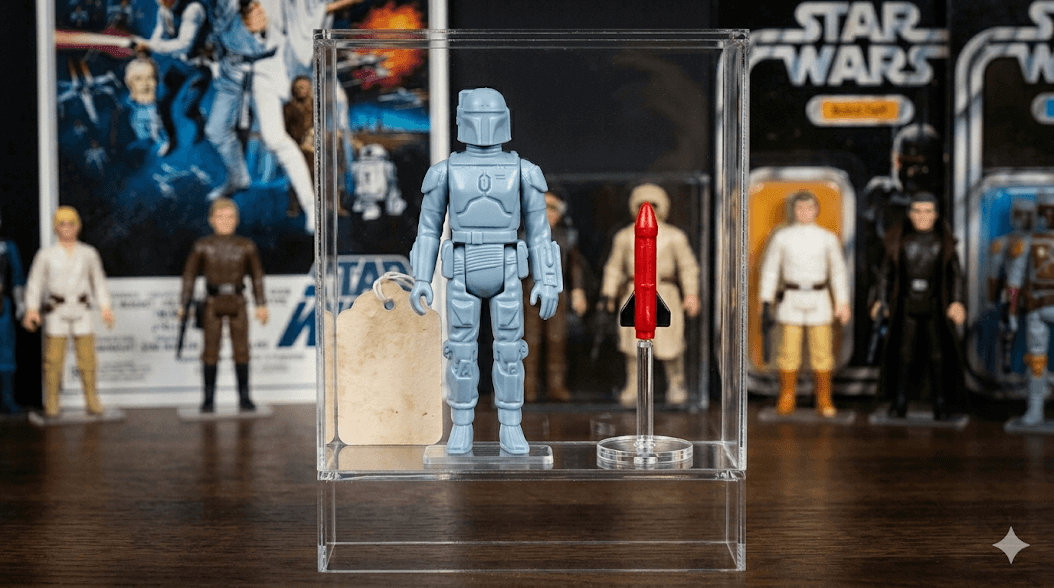
Sľub, ktorý Kenner nemohol splniť
Písal sa rok 1979 a svet šalel po Star Wars. Firma Kenner spustila geniálnu kampaň: stačilo poslať štyri štítky z kúpených figúrok a poštou vám prišiel nový, vtedy neznámy lovec odmien – Boba Fett. Hlavným lákadlom bola jeho unikátna funkcia: batoh s červenou raketou, ktorá sa dala skutočne vystreliť. Tisíce detí na tento moment čakali ako na zázrak, ktorý však nikdy neprišiel.
Strach z udusenia a náhla stopka
Tesne pred spustením masovej výroby zasiahla hračkársky svet panika. Objavili sa správy o deťoch, ktoré sa zranili vystreľovacími projektilmi pri iných hračkách. Kenner v obave z miliónových žalôb a ohrozenia zdravia urobil drastické rozhodnutie. Dizajn sa na poslednú chvíľu zmenil – batoh Boba Fetta natrvalo zalepili a raketa zostala len statickou dekoráciou. Sľúbená funkcia zmizla zo dňa na deň.
Tajomstvo vynesené v taškách zamestnancov
Hoci sa verzia s funkčnou raketou do obchodov nikdy nedostala, v továrni už existovalo približne 100 testovacích prototypov. Podľa prísnych pravidiel mali byť všetky zničené. Lenže niekoľko zamestnancov neodolalo a tieto „nepodarky“ si tajne vzali domov ako kuriozitu. Práve vďaka nim dnes existujú verzie „L-Slot“ a ešte vzácnejší „J-Slot“ – nazvané podľa tvaru mechanizmu na chrbte.
Svätý grál v plastovom väzení
Dnes je po celom svete známych len pár desiatok kusov. Tie najcennejšie sú v pôvodnom, nenafarbenom plaste, čo je nezvratný dôkaz ich prototypového pôvodu. Keď sa takýto kúsok objaví v aukcii, zberateľská komunita prestáva dýchať. Je to predmet, pre ktorý sú fanúšikovia Star Wars ochotní predať auto aj dom, len aby vlastnili kúsok histórie, ktorý sa oficiálne nemal nikdy zachovať.
Prečo stojí 230 000 dolárov?
Nie je to len kus plastu z konca 70. rokov. Je to symbol zlatej éry hračiek a pripomienka zlomového bodu v histórii bezpečnosti. V marci 2026 sa cena dokonale zachovaného prototypu (stupeň AFA 85+) stabilne drží na hranici 230 000 $. Je to fascinujúci dôkaz toho, že v zberateľstve majú najväčšiu hodnotu práve tie veci, ktoré boli pôvodne odsúdené na zánik.
Imagine a plastic figure less than four inches tall, completely unpainted, carrying a mechanism on its back that turned it into a nightmare for parents and lawyers alike. What was meant to be the hit of 1979 became the toy industry's most guarded secret due to safety fears. The price for this piece of plastic? A staggering $230,000.
This isn't just a toy. It is the "forbidden fruit" of the Star Wars galaxy and a symbol of the moment child safety rules changed forever.
A Promise Kenner Couldn't Keep
In 1979, the world was Star Wars mad. Kenner launched a brilliant campaign: mail in four proofs-of-purchase, and you’d receive a new, then-unknown bounty hunter—Boba Fett. The main attraction was a unique feature: a jetpack with a red rocket that could actually be fired. Thousands of children waited for this miracle, but it never arrived.
Choking Hazards and a Sudden Stop
Just before mass production began, panic struck the toy industry. Reports emerged of children being injured by projectile toys from other brands. Fearing million-dollar lawsuits and health risks, Kenner made a drastic decision. The design was changed at the last minute—Boba Fett’s jetpack was permanently sealed, and the rocket became a static decoration. The promised feature vanished overnight.
Secrets Carried Out in Staff Bags
Although the rocket-firing version never hit stores, about 100 testing prototypes already existed in the factory. By all accounts, they were supposed to be destroyed. However, a few employees couldn't resist and secretly took these "scraps" home as curiosities. Thanks to them, we now have the "L-Slot" and the even rarer "J-Slot" versions—named after the shape of the firing mechanism on the back.
The Holy Grail in a Plastic Case
Today, only a few dozen units are known to exist worldwide. The most valuable are in their original, unpainted plastic—irrefutable proof of their prototype origin. When one of these appears at auction, the collecting community holds its breath. It is an item for which Star Wars fans are willing to sell their cars and homes just to own a piece of history that officially should not exist.
Why is it Worth $230,000?
It’s not just a piece of plastic from the late 70s. It’s a symbol of the golden age of toys and a reminder of a turning point in safety history. As of March 2026, the price for a perfectly preserved prototype (graded AFA 85+) remains steady at $230,000. It is fascinating proof that in the world of collecting, the items originally destined for destruction often hold the greatest value.
Stellen Sie sich eine Plastikfigur vor, keine zehn Zentimeter groß, völlig unbemalt, mit einem Mechanismus auf dem Rücken, der sie zum Albtraum für Eltern und Anwälte machte. Was 1979 der Hit in den Kinderzimmern werden sollte, wurde aufgrund von Sicherheitsbedenken zum bestgehüteten Geheimnis der Spielzeugindustrie. Der Preis für dieses Stück Plastik? Wahnsinnige 230.000 Dollar.
Dies ist nicht nur ein Spielzeug. Es ist die „verbotene Frucht“ der Star-Wars-Galaxie und ein Symbol für den Moment, in dem sich die Sicherheitsregeln für Kinder weltweit für immer änderten.
Ein Versprechen, das Kenner nicht halten konnte
Wir schreiben das Jahr 1979, und die Welt war im Star-Wars-Fieber. Die Firma Kenner startete eine geniale Kampagne: Man musste nur vier Markierungen von gekauften Figuren einsenden, und schon erhielt man per Post den neuen, damals noch unbekannten Kopfgeldjäger – Boba Fett. Die Hauptattraktion war seine einzigartige Funktion: ein Jetpack mit einer roten Rakete, die tatsächlich abgefeuert werden konnte. Tausende Kinder warteten auf dieses Wunder, doch es kam nie an.
Erstickungsgefahr und der plötzliche Stopp
Kurz vor Beginn der Massenproduktion brach in der Spielzeugbranche Panik aus. Berichte über Kinder, die sich durch abschießbare Projektile anderer Marken verletzten, machten die Runde. Aus Angst vor Millionenklagen und Gesundheitsrisiken traf Kenner eine drastische Entscheidung. Das Design wurde in letzter Minute geändert – Boba Fetts Jetpack wurde dauerhaft versiegelt, und die Rakete blieb eine statische Dekoration. Die versprochene Funktion verschwand über Nacht.
Geheimnisse in den Taschen der Mitarbeiter
Obwohl die Version mit funktionierender Rakete nie in die Läden kam, gab es in der Fabrik bereits etwa 100 Test-Prototypen. Eigentlich sollten sie alle vernichtet werden. Doch einige Mitarbeiter konnten nicht widerstehen und nahmen diese „Ausschussware“ heimlich als Kuriosität mit nach Hause. Dank ihnen gibt es heute die „L-Slot“- und die noch selteneren „J-Slot“-Versionen – benannt nach der Form des Mechanismus auf dem Rücken.
Der Heilige Gral im Plastikgehäuse
Heute sind weltweit nur noch wenige Dutzend Exemplare bekannt. Die wertvollsten bestehen aus dem ursprünglichen, unbemalten Kunststoff – ein unumstößlicher Beweis für ihren Status als Prototyp. Wenn ein solches Stück bei einer Auktion auftaucht, hält die Sammlerwelt den Atem an. Es ist ein Objekt, für das Star-Wars-Fans bereit sind, Autos und Häuser zu verkaufen, nur um ein Stück Geschichte zu besitzen, das offiziell gar nicht existieren dürfte.
Warum ist er 230.000 Dollar wert?
Es ist nicht nur ein Stück Kunststoff aus den späten 70ern. Es ist ein Symbol für das goldene Zeitalter der Spielzeuge und eine Erinnerung an einen Wendepunkt in der Sicherheitsgeschichte. Im März 2026 hält sich der Preis für einen perfekt erhaltenen Prototypen (Grad AFA 85+) stabil bei 230.000 $. Es ist ein faszinierender Beweis dafür, dass in der Welt des Sammelns oft die Dinge den höchsten Wert haben, die ursprünglich zur Vernichtung bestimmt waren.