Keď v roku 1840 poslal londýnsky spisovateľ Theodore Hook poštou kartón s posmešnou kresbou, netušil, že vytvára najstaršiu známu pohľadnicu na svete a jeden z najdrahších poštových žartov v histórii.
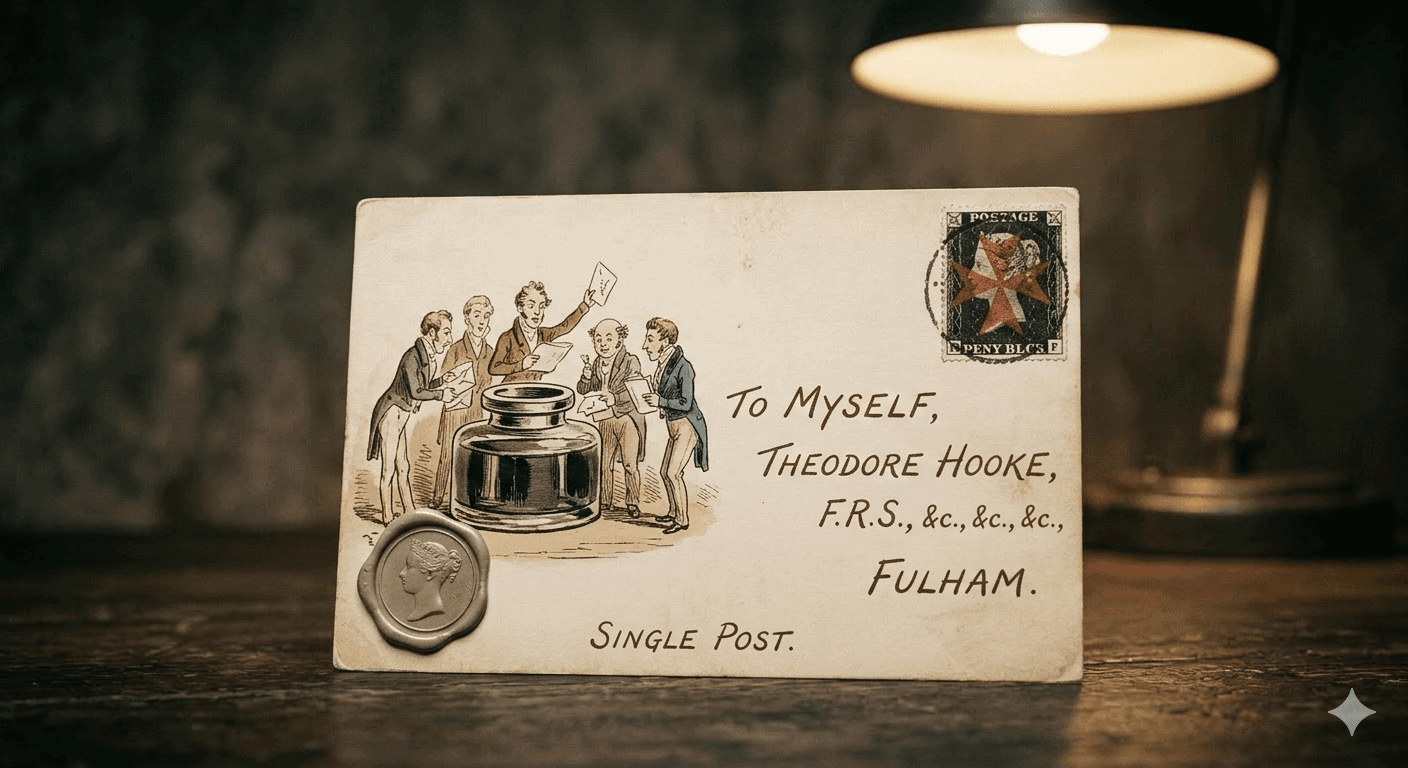
V roku 1840, keď britská pošta spustila revolúciu so známkou Penny Black(prvá oficiálna poštová známka na svete), sa známy londýnsky spisovateľ a vtipkár Theodore Hook rozhodol, že nový systém podrobí zaťažkávacej skúške. Bol preslávený svojimi extravagantnými žartmi a satirou, a práve jeden z jeho žartov sa stal malým historickým zázrakom. V tej dobe sa korešpondencia posielala v obálkach, aby sa zachovalo súkromie a dôstojnosť. Hook však urobil niečo neslýchané: vzal kus kartónu, na jednu stranu nakreslil drzú karikatúru poštových úradníkov a na druhú napísal svoju vlastnú adresu. Chcel zistiť, či pošta doručí „odhalený“ papier s posmešným obrázkom.
Tento experiment, ktorý by sme dnes nazvali „trollingom“, sa podaril. Pohľadnica prešla systémom a Hook ju so smiechom prijal. Netušil však, že týmto žartom predbehol oficiálne zavedenie pohľadníc o celých 30 rokov. Kým sa svet naučil posielať krátke pozdravy z dovoleniek bez obálok, Hookov unikát ležal zabudnutý v súkromných zbierkach. Historici ho dlho považovali len za mýtus, až kým sa v roku 2001 neobjavil na aukcii.
V roku 2002 sa tento kúsok kartónu stal najdrahšou pohľadnicou sveta, keď ju zberateľ Eugene Gomberg vydražil za 31 750 libier (v prepočte vtedy približne 45 400 USD). Hookova pohľadnica nie je cenná kvôli kráse, ale kvôli drzosti svojho autora. Je fascinujúce, že predmet, ktorý vznikol ako jednoduchý žart, dnes predstavuje cenný historický dokument. Ukazuje začiatky moderného poštového systému aj to, ako humor dokáže nečakane vstúpiť do dejín.Je to hmatateľný dôkaz, že ľudská potreba uťahovať si z autorít a testovať hranice systému je staršia než samotné moderné komunikácie. Dnes je tento „vtip“ uložený v trezore ako jeden z najvýznamnejších dokumentov poštovej histórie.
When in 1840 the London writer Theodore Hook sent a piece of cardboard with a mocking drawing through the mail, he had no idea that he was creating the oldest known postcard in the world and one of the most expensive postal pranks in history.
In 1840, when the British Post launched a revolution with the Penny Black stamp (the world’s first official postage stamp), the well-known London writer and prankster Theodore Hook decided to put the new system to the test. He was famous for his extravagant jokes and satire, and one of his pranks would become a small historical marvel. At that time, correspondence was sent in envelopes to preserve privacy and dignity. Hook, however, did something unprecedented: he took a piece of cardboard, drew a cheeky caricature of postal officials on one side, and wrote his own address on the other. He wanted to see if the post would deliver the “exposed” paper with the mocking illustration.
This experiment, what we might call “trolling” today, succeeded. The postcard made it through the system, and Hook received it with laughter. He had no idea that this prank anticipated the official introduction of postcards by a full thirty years. While the world was still learning to send short holiday greetings without envelopes, Hook’s unique creation lay forgotten in private collections. Historians long dismissed it as a myth, until it resurfaced at an auction in 2001.
In 2002, this piece of cardboard became the world’s most expensive postcard when collector Eugene Gomberg bought it for £31,750 (then roughly $45,400 USD). Hook’s postcard is valuable not for its beauty, but for the audacity of its creator. It is fascinating that an object that began as a simple joke now serves as a precious historical document. It shows the origins of the modern postal system and how humor can unexpectedly enter history. It is tangible proof that the human urge to mock authority and test the limits of a system is older than modern communication itself. Today, this “prank” is stored in a vault as one of the most significant documents in postal history.
Als der Londoner Schriftsteller Theodore Hook 1840 ein Stück Karton mit einer spöttischen Zeichnung per Post verschickte, ahnte er nicht, dass er die älteste bekannte Postkarte der Welt und einen der teuersten Poststreichs der Geschichte – erschuf.
Im Jahr 1840, als die britische Post mit der Penny-Black-Marke (der ersten offiziellen Briefmarke der Welt) eine Revolution einleitete, beschloss der bekannte Londoner Schriftsteller und Spaßvogel Theodore Hook, das neue System auf die Probe zu stellen. Er war für seine extravaganten Streiche und Satire berühmt, und einer seiner Scherze sollte zu einem kleinen historischen Wunder werden. Damals wurden Korrespondenzen in Umschlägen verschickt, um Privatsphäre und Würde zu wahren. Hook jedoch tat etwas Ungeheuerliches: Er nahm ein Stück Karton, zeichnete auf die eine Seite eine freche Karikatur von Postbeamten und schrieb auf die andere seine eigene Adresse. Er wollte sehen, ob die Post das „entblößte“ Papier mit der spöttischen Illustration zustellen würde.
Dieses Experiment, das man heute als „Trolling“ bezeichnen könnte, gelang. Die Postkarte durchlief das System, und Hook erhielt sie lachend zurück. Er ahnte nicht, dass er mit diesem Streich der offiziellen Einführung von Postkarten ganze dreißig Jahre voraus war. Während die Welt noch lernte, kurze Urlaubsgrüße ohne Umschläge zu verschicken, lag Hooks einzigartiges Werk vergessen in privaten Sammlungen. Historiker hielten es lange für einen Mythos, bis es 2001 bei einer Auktion wieder auftauchte.
Im Jahr 2002 wurde dieses Stück Karton zur teuersten Postkarte der Welt, als der Sammler Eugene Gomberg sie für 31.750 Pfund (damals etwa 45.400 USD) erwarb. Hooks Postkarte ist nicht wegen ihrer Schönheit wertvoll, sondern wegen der Kühnheit ihres Schöpfers. Faszinierend ist, dass ein Objekt, das als einfacher Scherz begann, heute ein wertvolles historisches Dokument darstellt. Es zeigt die Anfänge des modernen Postwesens und wie Humor unerwartet Geschichte schreiben kann. Es ist ein greifbarer Beweis dafür, dass der menschliche Drang, Autoritäten zu verspotten und Systemgrenzen auszutesten, älter ist als die moderne Kommunikation selbst. Heute wird dieser „Streich“ in einem Tresor aufbewahrt und gilt als eines der bedeutendsten Dokumente der Postgeschichte.