Predstavte si malé kovové autíčko, ktoré sa vám zmestí do dlane. Má sýtoružovú farbu, zozadu mu trčia dva surfy a v roku 1969 bolo považované za totálny prepadák. Dizajnéri ho nenávideli, chlapci ho nechceli a firma ho prikázala zničiť. Dnes má tento „nepodarok“ hodnotu luxusného športového auta. Cena? Šialených 175 000 $.
Toto je príbeh Volkswagen Beach Bomb, hračky, ktorá mala skončiť v drvičke, no namiesto toho sa stala ikonou, ktorú dnes majiteľ stráži v zatemnenom trezore.
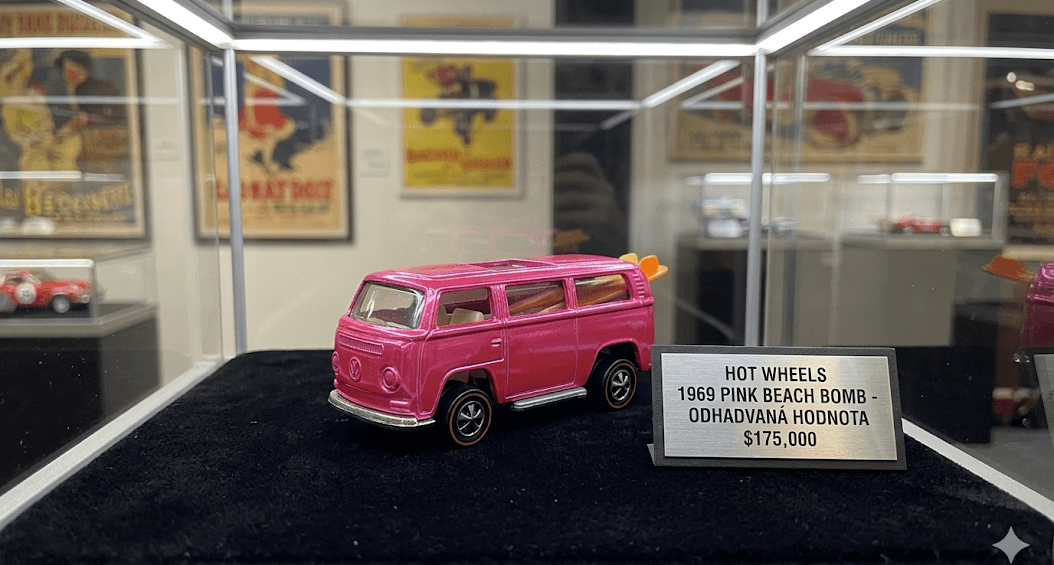
Konštrukčná chyba, ktorá stvorila legendu
V roku 1969 mal Mattel jasný plán: vydať surferský sen v mierke 1:64. Pôvodný prototyp, dnes známy ako „Rear-Loader“, mal dva surfy zasunuté priamo cez zadné okno. Keď ho však inžinieri pustili na ikonickú oranžovú dráhu Hot Wheels, prišla studená sprcha. Auto bolo príliš úzke, vysoké a kvôli surfom vzadu strácalo stabilitu. V každej zákrute vyletelo z dráhy – pre hračku postavenú na rýchlosti to bol rozsudok smrti.
Mattel projekt okamžite zastavil. Model kompletne prerobili, rozšírili mu boky a surfy presunuli do bočných držiakov. Pôvodné prototypy mali byť zlikvidované, no hŕstka zamestnancov si ich tajne vzala domov ako kurióznu pamiatku na chybu, ktorá sa nemala stať.
Prečo práve ružová?
Okrem chybnej konštrukcie hrala hlavnú rolu farba. Mattel v roku 1969 experimentoval s ružovým lakom v naivnej snahe prilákať k autíčkam aj dievčatá. Bol to marketingová katastrofa – chlapci ružovú odmietali a dievčatá v tej ére Hot Wheels nezaujímali.
Kombinácia fatálne chybného dizajnu a nepopulárnej farby vytvorila unikátnu anomáliu. Dnes sú na celom svete potvrdené iba 2 kusy v tejto konkrétnej konfigurácii.
Zberateľský fanatik a jeho poklad v trezore
Najslávnejší kus dnes vlastní legendárny zberateľ Bruce Pascal. Ten ho kúpil v roku 1999 za vtedy neslýchaných 72 000 $, čo mnohí považovali za čisté šialenstvo. Čas mu však dal za pravdu. Pascal odvtedy odmietol ponuky presahujúce 200 000 $.
Svoj poklad uchováva v špeciálnom zatemnenom trezore s kontrolovanou teplotou, aby vzácny ružový lak nevybledol pod vplyvom svetla. „Je to ako mať Picassa v krabičke od zápaliek,“ hovorí Pascal o svojej Ružovej bombe. V marci 2026 sa jej hodnota odhaduje na 175 000 až 200 000 $, čím suverénne kraľuje svetu malých modelov.
Imagine a small metal car that fits in the palm of your hand. It’s bright pink, has two surfboards sticking out the back, and back in 1969, it was considered a total failure. Designers hated it, boys didn't want it, and the company ordered it to be destroyed. Today, this "flop" is worth as much as a luxury sports car. The price? A staggering $175,000.
This is the story of the Volkswagen Beach Bomb, a toy that was meant for the scrap heap but instead became an icon guarded in a darkened vault.
A Design Flaw That Created a Legend
In 1969, Mattel had a plan: release a 1:64 scale surfer’s dream. The original prototype, now known as the "Rear-Loader," featured two surfboards slid directly through the rear window. But when engineers sent it down the iconic orange Hot Wheels track, they hit a snag. The car was too narrow, too top-heavy, and lost stability because of the boards in the back. It flew off the track at every turn—a death sentence for a toy built for speed.
Mattel halted the project immediately. They completely redesigned the model, widening the body and moving the surfboards to side pockets. The original prototypes were supposed to be destroyed, but a handful of employees secretly took them home as curious mementos of a mistake that shouldn't have happened.
Why Pink?
Beyond the flawed design, the color played a major role. In 1969, Mattel experimented with pink paint in a naive attempt to attract girls to the world of toy cars. It was a marketing disaster—boys rejected the pink, and girls at the time weren't interested in Hot Wheels.
The combination of a fatally flawed design and an unpopular color created a unique anomaly. Today, there are only 2 confirmed units in the world in this specific configuration.
A Collector’s Obsession and the Vaulted Treasure
The most famous piece is owned today by legendary collector Bruce Pascal. He bought it in 1999 for what was then an unheard-of $72,000—a move many considered pure madness. Time proved him right. Pascal has since turned down offers exceeding $200,000.
He keeps his treasure in a special darkened, temperature-controlled vault to prevent the rare pink paint from fading under light. "It's like having a Picasso in a matchbox," Pascal says of his Pink Bomb. As of March 2026, its value is estimated between $175,000 and $200,000, making it the undisputed king of the die-cast world.
Stellen Sie sich ein kleines Metallauto vor, das in Ihre Handfläche passt. Es ist leuchtend rosa, hat zwei Surfbretter, die hinten herausragen, und im Jahr 1969 galt es als totaler Flop. Die Designer hassten es, Jungs wollten es nicht, und die Firma ordnete seine Vernichtung an. Heute ist dieser „Ausschuss“ so viel wert wie ein Luxussportwagen. Der Preis? Wahnsinnige 175.000 $.
Dies ist die Geschichte des Volkswagen Beach Bomb, eines Spielzeugs, das eigentlich für den Schrottplatz bestimmt war, stattdessen aber zu einer Ikone wurde, die heute in einem dunklen Tresor bewacht wird.
Ein Konstruktionsfehler, der eine Legende erschuf
Im Jahr 1969 hatte Mattel einen Plan: einen Surfer-Traum im Maßstab 1:64 zu veröffentlichen. Der ursprüngliche Prototyp, heute bekannt als „Rear-Loader“, hatte zwei Surfbretter, die direkt durch das Heckfenster geschoben wurden. Doch als die Ingenieure ihn über die ikonische orangefarbene Hot-Wheels-Bahn schickten, folgte die Ernüchterung. Das Auto war zu schmal, zu hoch und verlor durch die Bretter am Heck die Stabilität. Es flog in jeder Kurve von der Bahn – ein Todesurteil für ein Spielzeug, das auf Geschwindigkeit getrimmt war.
Mattel stoppte das Projekt sofort. Das Modell wurde komplett überarbeitet, die Karosserie verbreitert und die Surfbretter in seitliche Halterungen verlegt. Die ursprünglichen Prototypen sollten vernichtet werden, doch eine Handvoll Mitarbeiter nahm sie heimlich als kurioses Andenken an einen Fehler mit nach Hause.
Warum ausgerechnet Rosa?
Neben dem fehlerhaften Design spielte die Farbe eine entscheidende Rolle. Mattel experimentierte 1969 mit rosa Lack in dem naiven Versuch, auch Mädchen für die Welt der Modellautos zu begeistern. Es war ein Marketing-Debakel – Jungs lehnten das Rosa ab, und Mädchen interessierten sich damals nicht für Hot Wheels.
Die Kombination aus einem fatal fehlerhaften Design und einer unpopulären Farbe schuf eine einzigartige Anomalie. Heute gibt es weltweit nur 2 bestätigte Exemplare in dieser speziellen Konfiguration.
Ein leidenschaftlicher Sammler und sein Schatz im Tresor
Das berühmteste Stück befindet sich heute im Besitz des legendären Sammlers Bruce Pascal. Er kaufte es 1999 für die damals unglaubliche Summe von 72.000 Dollar – ein Schritt, den viele für reinen Wahnsinn hielten. Die Zeit gab ihm recht. Pascal hat seitdem Angebote von über 200.000 Dollar abgelehnt.
Er bewahrt seinen Schatz in einem speziellen, dunklen und klimatisierten Tresor auf, damit der seltene rosa Lack nicht durch Lichteinfall verblasst. „Es ist, als hätte man einen Picasso in einer Streichholzschachtel“, sagt Pascal über seine Pink Bomb. Im März 2026 wird ihr Wert auf 175.000 bis 200.000 $ geschätzt, womit sie der unangefochtene König der Modellautowelt ist.